
The importance of timely and effective content design cannot be overstated. Too early and you’re flying blind. And if you’re too late and you’re stepping on toes, often with poorly considered quick-fixes. During a recent talk at WebExpo 2025, MEWS Content Design Manager Erin O’Loughlin, illuminated the crucial relationship between timing and collaboration in content design, particularly in the context of user interface (UI) content. In this talk, “Just-in-time content design: Why timing is the key to better collaboration and UI content,” Erin’s presentation explored how a just-in-time approach to content design can prevent common copy headaches and improve the overall user experience from design to deployment.
Unpacking the responsibilities of content designers
At the core of Erin’s session was a clear definition of the role of a content designer. She described content designers as the individuals responsible for crafting the messaging and content that guides users through a product’s interface. “We’re the people who are writing all of the messaging, all of the content for your product UI,” Erin stated. This foundational role encompasses much more than merely generating words for the screen; it involves a strategic approach to ensuring clarity and consistency throughout the user journey.
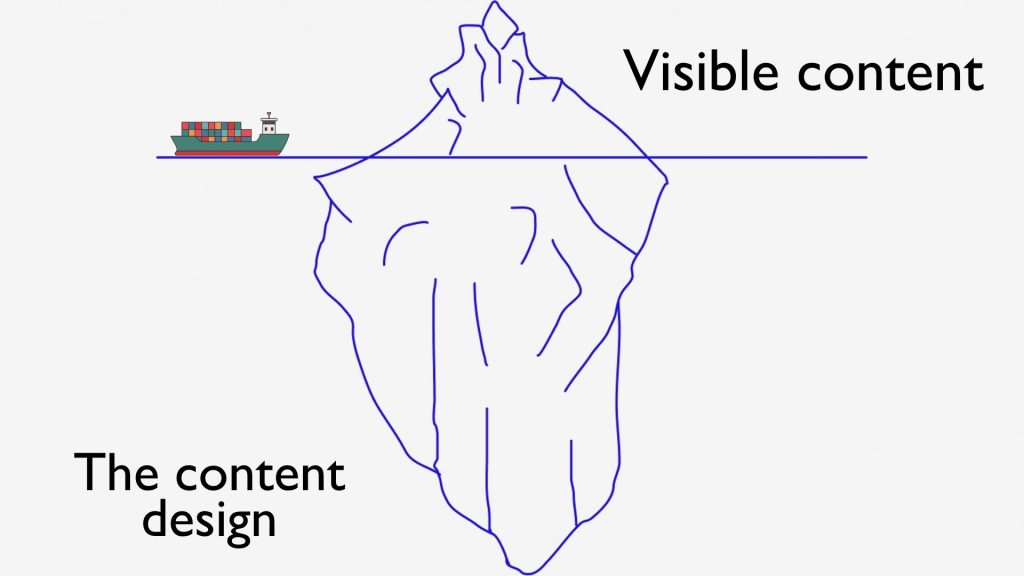
Erin illustrated this by comparing content design to an iceberg: “The micro copy… they’re really that tip of the iceberg that is the visible content. It’s the part that you can see, but the part underneath that other 90% of the iceberg is the content design.” This metaphor highlights the often invisible work that underpins effective UI content, emphasising the necessity of integrating content design into the development process right from the beginning.
Finding the sweet spot for content design
This leads to the crux of Erin’s argument: the value of a just-in-time approach. And here, Erin proposed the CARGO framework, consisting of several key moments when content designers should be woven into the development process. Instead of waiting until the final stages of product design, Erin advocated for ongoing collaboration. “You need to bring us in a lot earlier,” she urged, insisting that clarifying when to involve content design is essential for a successful product launch.
So, what is the CARGO framework? At its core, this is a step-by-step evaluation of when to introduce content designers in relevant stages.
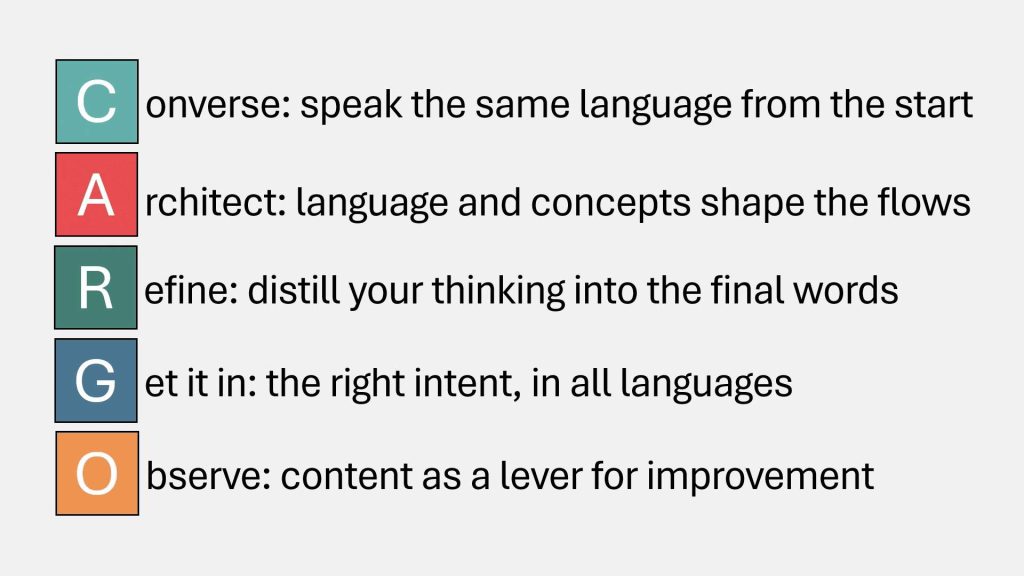
C = Converse.
One significant aspect of this framework highlighted the imperative for teams to establish a common language. “Do we know how to converse about this feature?” Erin asked her audience, stressing the importance of consistency in terminology. This ensures that all team members are aligned internally and that the language used resonates appropriately with end-users.
A = Architecture. Structuring information for user flows
The next stage in Erin’s framework involves content designers helping to architect the flow of information within the user journey. She posed the question, “Do we know the best way to structure this information?” Here, content designers can significantly influence the sequencing of content to enhance user experience. Erin provided a practical illustration involving an online check-in flow, emphasising how foresight in these stages can preempt user frustration and contribute to smoother interactions.
“Your content designer will think about not just what information to know on this screen, but what information will help you get there,” Erin clarified, showcasing the proactive role content designers can play. Their insights can lead to better user journeys, minimising drop-offs and enhancing conversion rates.
R = Refining. Refine content for clarity
As Erin progressed through her framework, she delved into the refining process of content design, encouraging teams to treat this stage as an opportunity to distil thoughts into purposeful language: “The writing doesn’t start here. It’s about refining all of that thinking into clear, really purposeful words.” This insightful reminder serves to emphasise that clarity in content not only benefits user experience but also helps maintain the integrity of the messaging across the product.
G = Get it in.
This is “all about asking how we get the right content into the code and how we go from design to implementation with our words”. Erin identifies the impact of collaboration with engineering teams and explains how the handover process is vital for ensuring the correct content is integrated effectively. She stated, “You need to QA your content for more than just typos. You’re looking for meaning and intention and logic”, as demonstrated with the differences between ‘amount’ in German. Wrong context = wrong word. This approach ultimately ensures the content resonates correctly across various languages and contexts in the end product.
O = Observe. Continuous improvement and iteration
Erin concluded her talk by discussing the essential nature of post-launch content evaluations. She encouraged teams to engage with content designers to explore metrics and hypotheses for improving content. “It’s a lot quicker and easier to change the words than it is if you have to recode something or if you have to redo all of the designs,” Erin pointed out, reinforcing the significant benefits of ongoing collaboration in content design.
By adopting a just-in-time content design approach, product teams can not only enhance their collaboration but also optimise user experiences through thoughtful content strategies.
For those interested in diving deeper into Erin O’Loughlin’s highly rated presentation, see the full video recording and slides below.