
Milliseconds matter, more and more…
At his WebExpo 2025 talk, Tim Kadlec took the stage to address a pressing issue for developers and businesses alike: the evolving expectations of web performance. Tim opened with an engaging exercise, compelling everyone to perform a simple blink, grounding the audience with the shared instant of 100 to 150 milliseconds. That’s the typical duration of a blink. This seemingly insignificant measure sets the stage for a conversation about performance that goes far beyond mere speed.
Tim underscored the impact of web performance on business outcomes, referencing striking statistics: “Walmart years ago discovered that a 100-millisecond improvement in performance led to a 1% lift in revenue.” For web giants like Amazon, “100 milliseconds meant 1% increase in revenue.” Tim’s message was clear: when it comes to web performance, every millisecond counts.

The paradox of progress
Despite advancements in technology, Tim warned against complacency. “Our expectations are not constant. As technology improves, so does our expectation of what that technology should be capable of,” he noted. The talk touched on the Jevons Paradox, reminding us that while more powerful devices and faster networks emerge, they invariably fuel an increase in consumption. Tim further illustrated this through a personal story: his son’s frustration with a slow-loading page exemplified how rising standards can render current performance benchmarks insufficient.
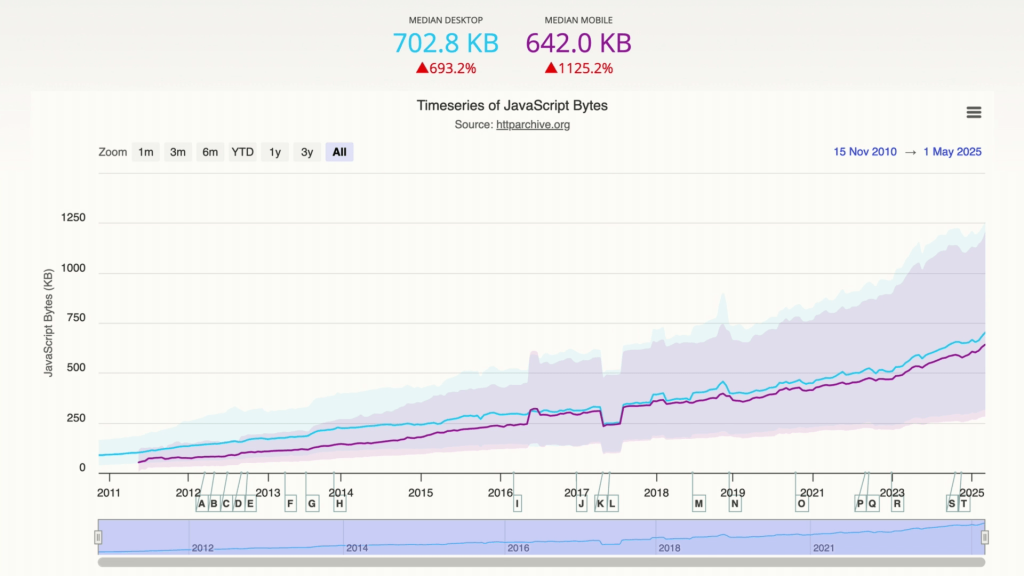
Tim further explained the “hedonistic treadmill,” the cycle by which users’ perceptions of performance evolve. As users become accustomed to instantaneous responses in gaming or cutting-edge applications, the demand for similar responsiveness in all web experiences grows. Consequently, even minor delays can feel intolerable.
New standards for an instant web
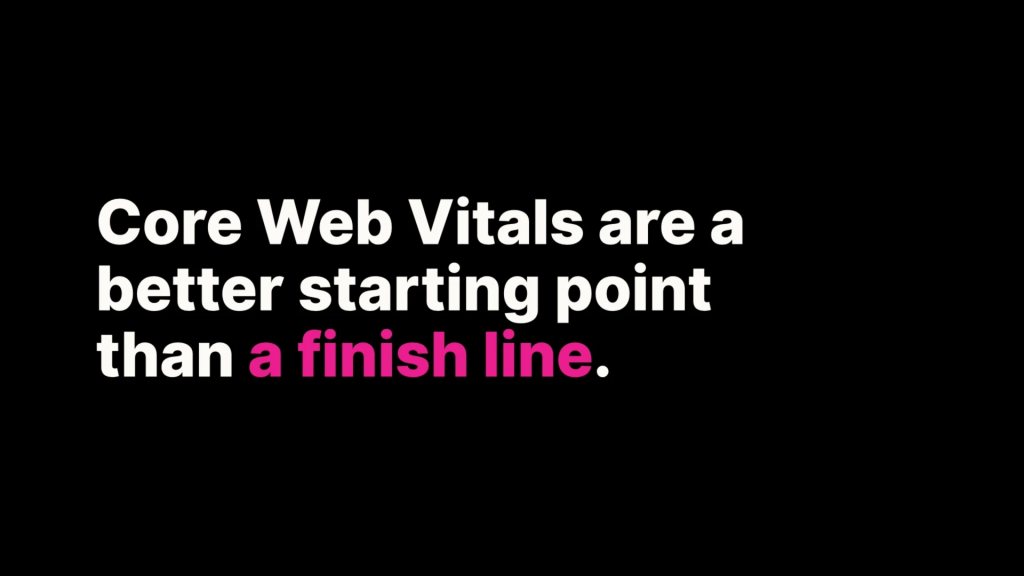
In a landscape where performance must exceed expectations, Tim stressed the importance of emerging web standards. He delved into the exciting realm of Core Web Vitals, pointing out their centrality in today’s performance discussions. These metrics, he argued, should serve “as a starting point rather than a finish line”.
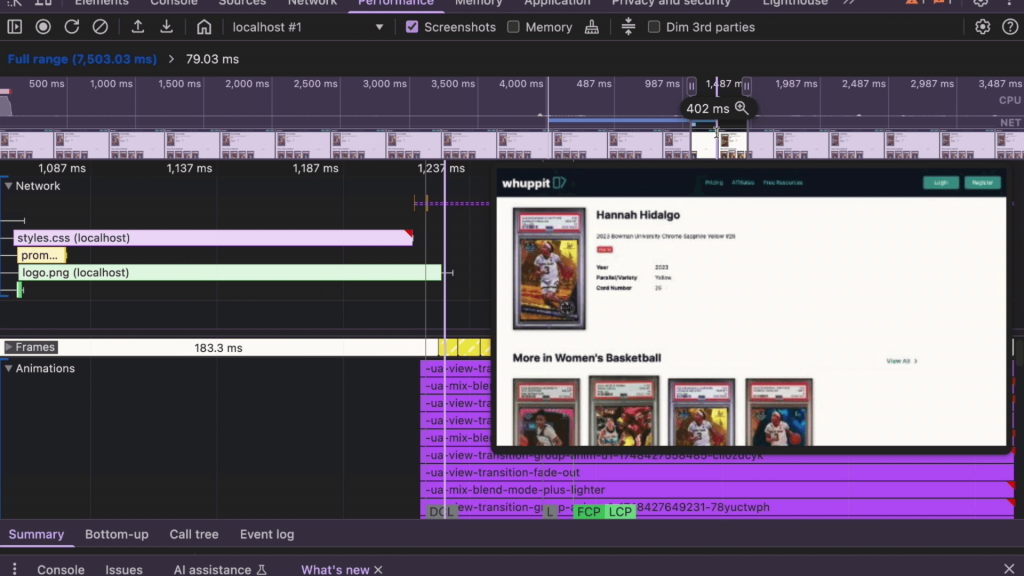
One of the standout features in Tim’s presentation was the demonstration of view transitions, a new method for crafting immersive web experiences with minimal effort. The ease of implementation, requiring “just a few lines of code,” signals a democratisation of powerful interactive features. This ability to unlock “a massive wave of innovation and opportunities” with simple techniques represents a fundamental shift for developers.
Tim also discussed speculation rules, a mechanism for pre-fetching and pre-rendering pages to anticipate user actions. This proactive approach helps reduce perceived delays, reflecting a critical trend in web development: preemptive resource loading. Citing Harry Roberts’ work, Tim showed how layering eagerness levels with actions can yield substantial improvements: “We actually see about 67 milliseconds improvement in Largest Contentful Paint now by doing that for subsequent pages.”
A return to the fundamentals
While new standards and tools provide fresh avenues for performance enhancements, Tim reminded the audience of the enduring relevance of foundational principles. His showcase highlighted how even with advanced techniques like speculation rules and view transitions, the basics, such as efficient use of external stylesheets, remain vital.
He emphasised the idea that true performance gains come from a “ruthless obsession for the user experience.” It’s about finding the balance between cutting-edge features and tried-and-tested methods, ensuring everything is trimmed and focused on an experience that goes beyond feeling quick and starts to feel instantaneous.
Building for tomorrow’s web
In concluding the talk, Tim reinforced the significance of betting on the browser as the pathway to lasting success. By integrating web standards and browser capabilities, developers can push the boundaries of what’s possible. With collaborative innovation between frameworks and browsers, “the best abstractions are the ones that will start to slowly fade away” as they become part of the fundamental web toolkit.
The presentation, punctuated by insights with practical examples, led to a compelling call to action: to embrace these new tools and standards as part of a broader strategy to remain one step ahead in the race for instantaneous web performance. For more in-depth insights and technical details from Tim’s talk, the video recording and slides are available below.